
Double-Page Spread Brainstorming

After analyzing the features of a double-page spread to see what I liked and what I disliked, I have decided to look at several more examples to help me brainstorm.


Nicki Minaj is the main image, 'The Gospel According to N... 

The double-page spread above features the model, Nicki Minaj throughout both pages of the double-page spread though most of her body is on one of them. The image used is a mid-shot which brings more emphasis towards Nicki's accessories being displayed, and we can see her face in clearer detail. For the color scheme, various shades of pink are used along with black and white. Nicki Minaj, wears black and white, which matches with the font, and her pink lipstick stands out to coordinate with other parts of the font. I like the color coordination that was used because it makes everything more visually appealing, including the pink ombré background. I think there is too much small text which is not something I would want to reflect in my own double-page spread, but I like how they try to reduce it by dividing the texts. 
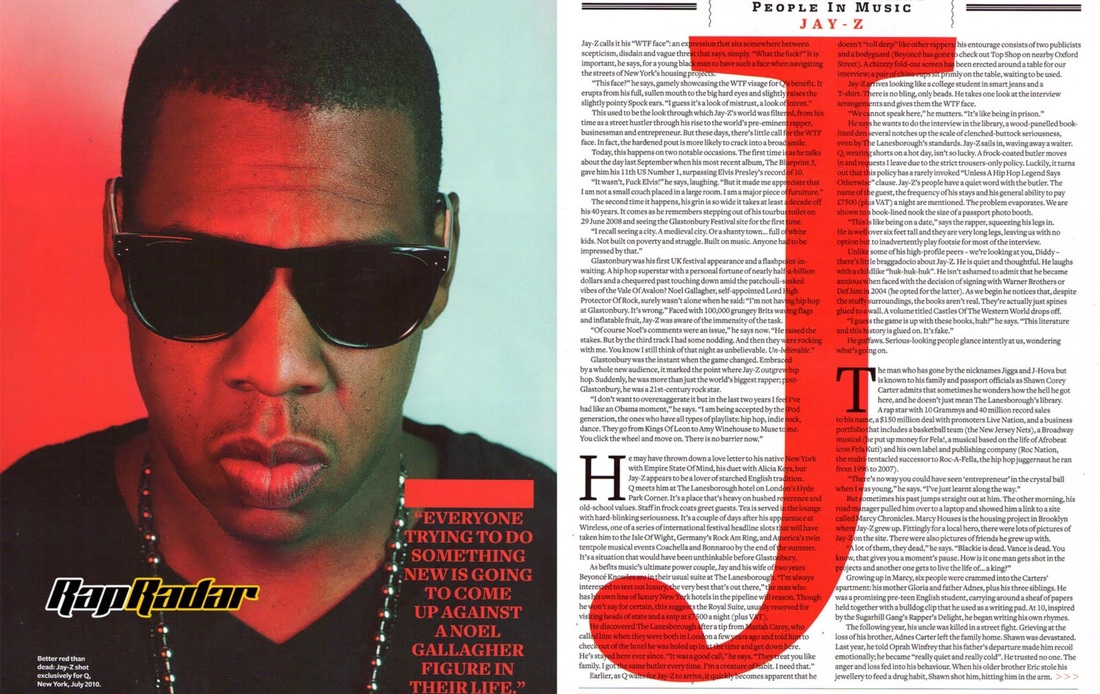

Picture

The double-page spread above features the model, Jay-Z on the entire left page with minimal text. The medium close-up brings emphasis to his serious facial expression and sunglasses that hide his eyes. This page includes a pull quote in red font which matches half of the background of Jay-Z's image. On the next page, the text is in black which matches Jay-Z's t-shirt and sunglasses. There is a large J displayed in red font with Jay-Z's name on this page, which also contributes to the color scheme. Compared to the last double-page spread, this one includes more text and conveys the artist in a more serious manner.


From both magazines I analyzed, I like the first one more. I learned about the effect of dividing text into more columns because it helps make the story more appealing, and people can feel more motivated to read it. If text seems to take up too much of the page, readers may stray away from reading it. 

Comments

Popular posts from this blog

Conventions

To learn more about the designing process of a magazine, I have done research on magazine conventions. They are features that compose a magazine (both the cover and the articles). Given that the front cover is what must appeal to people in order to get their attention, those are the conventions I will discuss in this post. Masthead: magazine's title which will usually be the larger text; the masthead is usually the first thing readers notice Tagline:  gives an idea of what the magazine focuses on Cover line: mention what is inside the magazine (may include attention grabbing names/topics that will attract audiences) Central image: a large image on the cover to appeal to people Cover model: person or people (usually in the central image) that will be included in the magazine Color scheme: the combination of different colors used in the magazine (including the font type/color) Barcode: placed in a spot where it does not take attention away from the other conventions (usually in one o...

Final Cover Page


Double-Page Spread Analysis

Now that I have learned more about the double-page spread conventions, I analyzed one to determine which features I want to reflect in my own magazine. In the double-page spread above, the artist, Beyoncé, is featured across both pages. Being carried by several people brings the main spotlight to her because she is the center. The men carrying her are wearing black and white, and she is wearing a black dress. The lack of color in the models' clothings help them contrast with the spread's light ombré background. Also, all of the writing on both pages is in white font to avoid taking attention away from the main image. Since the image takes up more than half of the space in each page, there is only a small paragraph to talk about Beyoncé. The use of a short paragraph in a small font helps the emphasis remain on the image featured. Similarly, the anchorage text being on the top right in small font creates the same effect. I like the idea of using color for the background and estab...